
Project
Hotel Café Royal - Giogali
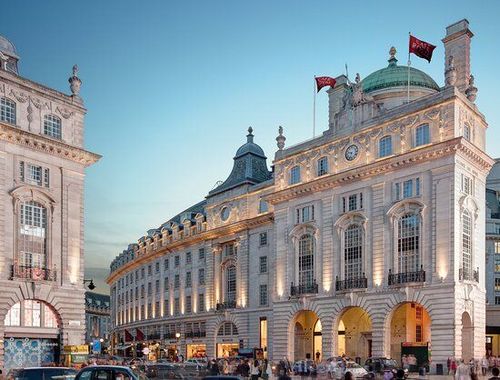
Located at 68 Regent Street in the heart of London, the Hotel Café Royal is today one of the city's most iconic five-star hotels. Long before its transformation into a luxury hospitality destination, Café Royal was already renowned as one of London's most celebrated meeting places, frequented by artists, intellectuals, politicians, and leading figures from the international cultural scene.
The history of Café Royal began in the second half of the nineteenth century when, in 1865, the building was acquired by Daniel Nicholas Thévenon, a French wine merchant forced to leave France after the collapse of his business. Having moved to Great Britain with his wife Célestine and only five pounds to his name, Thévenon adopted the name Daniel Nicols and took over the management of Café Royal, quickly transforming it into one of the most exclusive and prestigious venues in Victorian London. Thanks to his entrepreneurial vision, the establishment also became famous for its remarkable wine cellar, considered among the finest in the world at the time.
By the end of the nineteenth century, Café Royal had become the quintessential centre of London's social life, the place to "see and be seen." Its regular patrons included figures such as Oscar Wilde, Virginia Woolf, Winston Churchill, George Bernard Shaw, Mick Jagger, Elizabeth Taylor, Muhammad Ali, and Diana, Princess of Wales. Its rooms also witnessed significant moments in British history, including the famous meeting of 24 March 1895, during which Frank Harris advised Oscar Wilde to withdraw his lawsuit against the Marquess of Queensberry, an event that preceded the writer's trial and subsequent conviction.
In December 2008, Café Royal temporarily closed to undergo an extensive four-year conservation and restoration programme. Reopened in 2012, the historic building was transformed into a refined luxury hotel through a project by David Chipperfield and David Chipperfield Architects, which carefully preserved the property's heritage while reinterpreting it through a contemporary architectural language. As part of this redevelopment, the interior design project was entrusted to Lissoni Casal Ribeiro, alongside David Lopez Quincoces, Stefano Castelli and Pino Caliandro, who were commissioned to redesign the hotel's principal public areas, including the lobby, concierge, restaurants, and sushi bar.
The intervention is defined by a delicate balance between historical memory and contemporary design. While preserving the original 1865 structure, the spaces were reimagined to meet the functional requirements of a modern luxury hotel, creating a sophisticated environment where materials, light, and architectural details engage in a harmonious dialogue with the building's historic decorative elements.
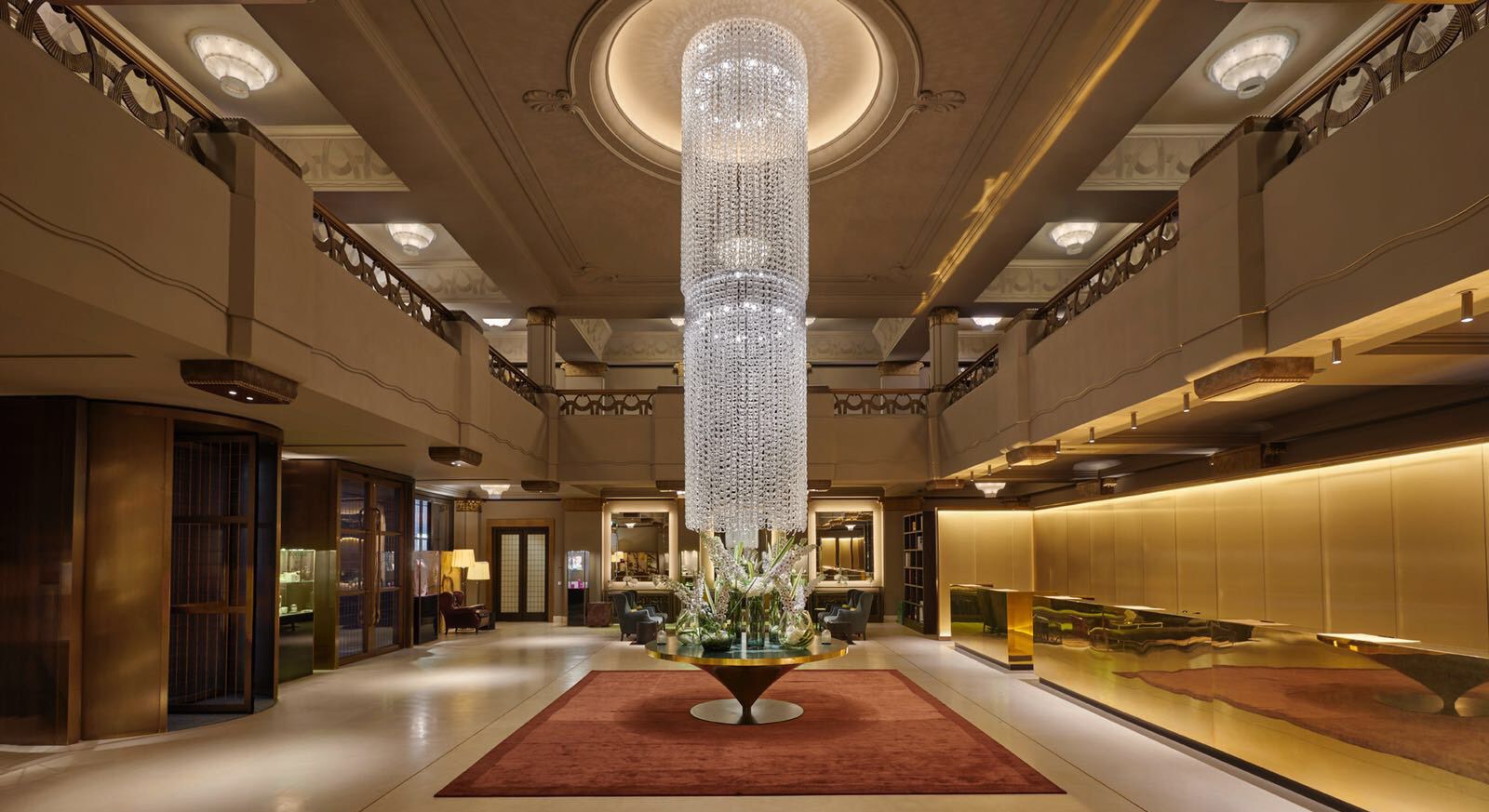
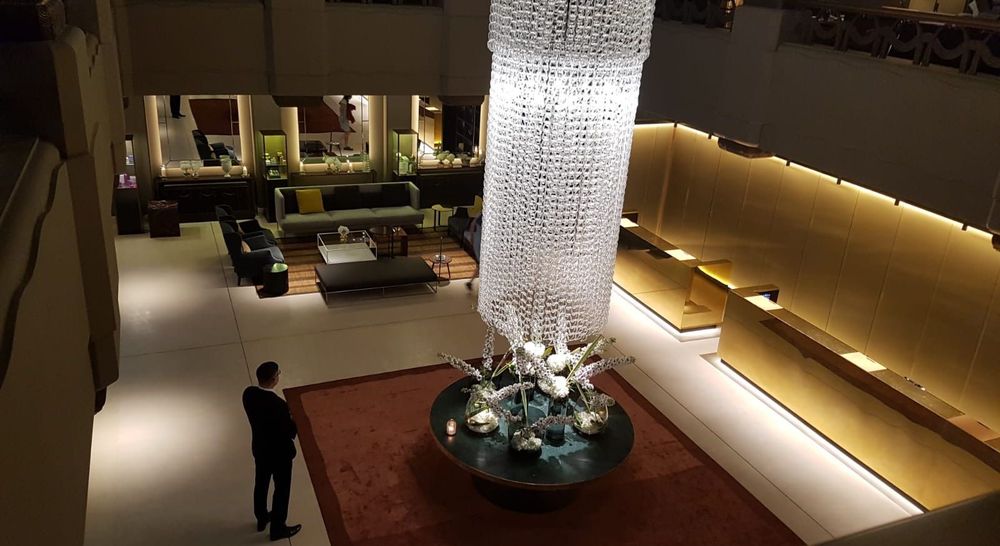
The lobby unfolds as a dramatic double-height space, conceived to create an immediate sense of grandeur and elegance. At the heart of the composition hangs a bespoke chandelier from Vistosi's Giogali collection, crafted from pure crystal and designed to serve as the visual focal point of the entire space. Designed in 1967 by Angelo Mangiarotti, Giogali is one of Vistosi's most iconic collections and is distinguished by its innovative modular system based on a single hand-crafted crystal element. The collection's extraordinary compositional flexibility allows for endlessly unique installations, transforming light into a true form of decorative architecture.
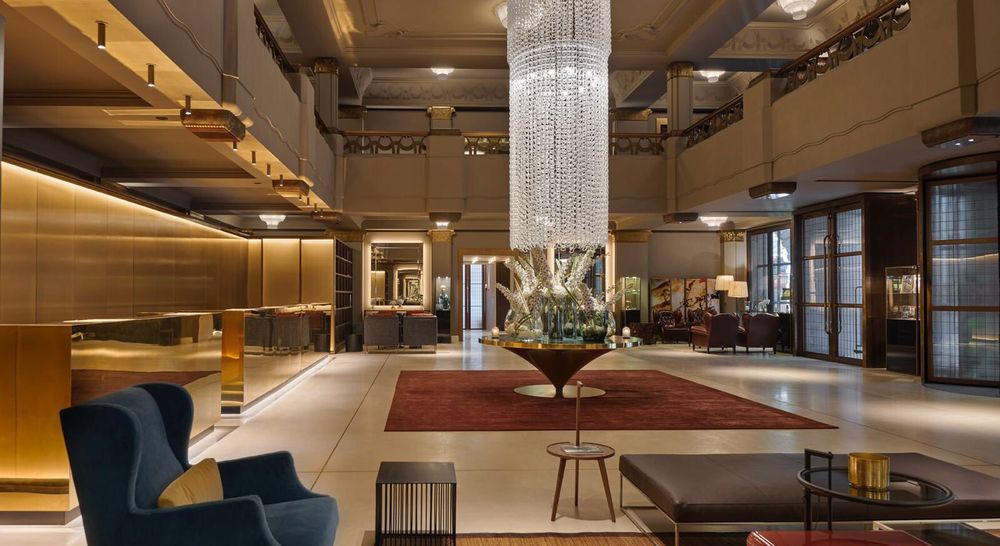
Within the Hotel Café Royal project, the monumental lighting installation unfolds as a cascading composition of crystal elements that descends gracefully above the large polished brass table, creating a rich visual and material dialogue with the architectural features of the lobby. Brass is also used to define the two large parallelepiped reception desks, echoing the building's historic ornamental details, such as the column capitals, and helping to establish a seamless continuity between past and present.
Behind the reception area, backlit fluted glass further enhances the depth and atmosphere of the space, diffusing a soft and sophisticated glow throughout the interior. On either side of the lobby, two lounges unfold in warm, enveloping tones, designed to offer guests a welcoming and relaxed experience. Adjacent to these spaces is the concierge area, conceived as a more intimate and private setting, enriched by comfortable furnishings and an elegant library that reinforces the timeless and exclusive character of the overall design intervention.
© 2024 Vetreria Vistosi srlVia Galileo Galilei, 9-9/A-1131021 Mogliano Veneto – TV (Italy)T. +39 041 5903480 / +39 041 5900170Email: vistosi@vistosi.itVAT No. IT02497840278Company Register No. 01808840266REA TV Registration No. 170728Share Capital €100,000.00
©2024 Vetreria Vistosi s.r.l. All rights reserved
Subscribe to our newsletter
Follow us on


